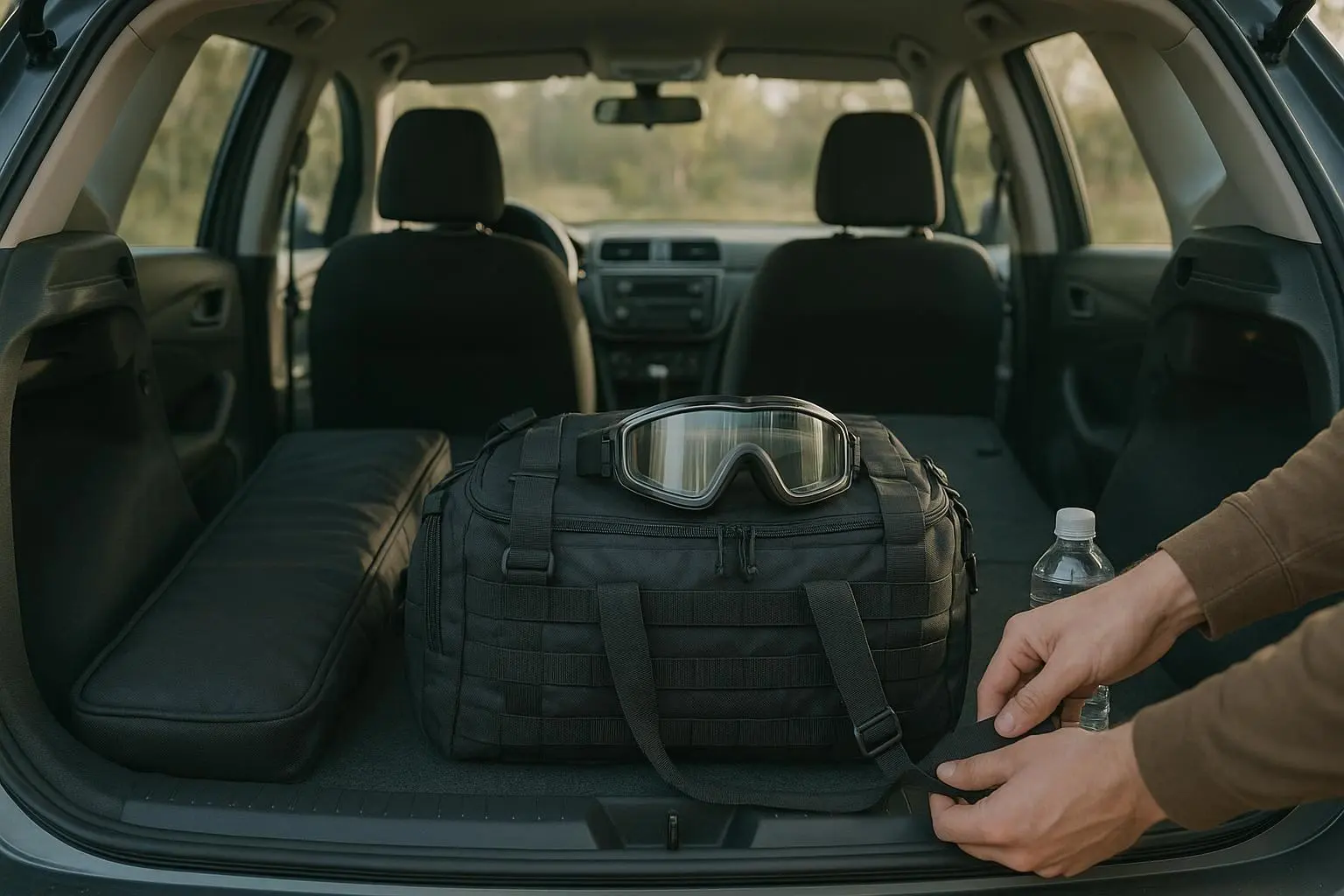

Before your first full day at the field, choose a setup you have checked properly rather than bringing every piece of equipment you own. A Saturday booking can involve travel, changing weather, long periods in protective equipment and several chances to discover a weak battery, loose fastener or missing rule. This airsoft field checklist follows a Friday-evening preparation routine, helping you make sensible decisions before the trip instead of at the chronograph or safe zone.
Start with the field's actual requirements
Begin with the venue's current player information, not a generic packing list. Fields may set their own limits for equipment, ammunition, eye protection, footwear, magazine types, pyrotechnics and clothing. Ask the organiser what is required, what is prohibited and what happens if equipment fails the site's safety check.
Read the rules even if a friend says the event is relaxed. Local procedures can cover safe-zone behaviour, test-firing areas, minimum engagement guidance, surrender rules, hit calling, dead-player routes and dispute handling. These details vary between venues and event formats. If a rule concerns replicas, transport, ownership or public carry, check current official guidance for your location because laws and regulations can change.
For a first airsoft game, simplicity is useful. Take equipment you understand and avoid unfamiliar accessories simply because they look helpful. A dependable basic setup that you can inspect and adjust is easier to manage than a crowded load-bearing rig full of untested items.
Treat eye protection as a pass-or-fail decision
Airsoft eye protection is a condition of taking part, not a comfort upgrade. Use protection accepted by the field and designed for the activity; ordinary glasses, fashion eyewear and improvised substitutes are not equivalent. Confirm the venue's requirements before travelling, since acceptance may depend on the product's marking, construction and whether it fully seals around the eyes.
Inspect the lenses for cracks, deep scratches or clouding, and check for loose parts. The frame should sit securely, with a strap that holds it in place when you bend, turn or move quickly. If you wear prescription glasses, confirm that the chosen protection fits over them safely rather than pressing against the lenses. Anti-fog treatment may help, but it cannot replace a secure fit or clean lens.
Pack a soft cloth and a safe way to store the protection between games. Never remove it in a play area because the action appears to have stopped. Leave it on until you are inside the designated safe zone and have followed the field's instructions.
Check the replica, power source and small failures
Keep the Friday-evening maintenance check modest. Look for visible damage, loose screws, cracked housings, exposed wiring, unusual movement and anything that changed after the last use. Make sure magazines insert and release normally, controls work as expected and the barrel is clear according to the manufacturer's safe-handling instructions. Do not experiment with internal changes or power increases before an event.
If the replica uses a battery, charge it with the correct charger and inspect the battery and connector for swelling, heat damage, frayed wires or a poor connection. Do not use a damaged battery. A spare helps only if it is compatible, safely stored and permitted by the venue. For gas-powered equipment, check for leaks and use only gas or maintenance products suitable for that system.
Bring a basic repair pouch rather than a workshop: the correct small screwdriver, spare fuses if the system uses them, a cloth, cable ties and any manufacturer-recommended lubricant. Leave a problem you cannot identify alone and refer it to a qualified technician or event staff. Safe airsoft maintenance is mostly inspection, cleaning and knowing when to stop.
Pack once, then use this short checklist
By Friday night, place everything in one bag and test the items you will actually wear. This prevents a missing strap or uncomfortable fit from becoming the main problem of the day.
– Field-approved eye protection, plus a clean storage case or pouch
– Replica, compatible magazines and a safe transport bag
– Correctly charged battery or suitable gas, stored safely
– Comfortable footwear and clothing suitable for the forecast and venue
– Water, food and any personal medication you may need
– Phone, identification, booking information and a small repair kit
– Spare socks or a light change of clothing if wet conditions are possible
– Biodegradable or venue-approved ammunition if the site specifies it
Try on the complete setup at home and walk around for a few minutes. Check that nothing blocks your view, catches on doorways or presses painfully when you sit. Leave behind anything that fails this test unless you can fix it safely before departure.
Let field rules shape your sportsmanship
On arrival, listen to the briefing even when it repeats points you already know. Confirm where eye protection must remain on, where replicas may be unloaded, how hits are acknowledged and where to report disagreements. If you are uncertain during a game, pause and ask a marshal rather than guessing.
Good airsoft sportsmanship is practical. Call your hits clearly, take an honest pause when unsure, avoid arguing in the play area and give other players room to resolve close moments without pressure. Do not remove another person's eye protection, handle their replica without permission or continue playing in a restricted area. A friendly correction after a game is usually more useful than a confrontation during it.
The Saturday scenario ends well when preparation becomes invisible: your protection stays in place, your equipment works within its limits and you know whom to ask when something is unclear. That is a better measure of readiness than carrying the most gear. Before leaving home, choose the setup you can inspect, operate and explain, then let the field's rules guide the rest of the day.